NHTSA Proposes Cyan Lighting Standard for Autonomous Vehicles
Federal regulators are seeking to standardize a unique blue-green light to help road users identify self-driving cars, while simultaneously removing obsolete controls requirements for driverless designs.
By Mei Lin ·
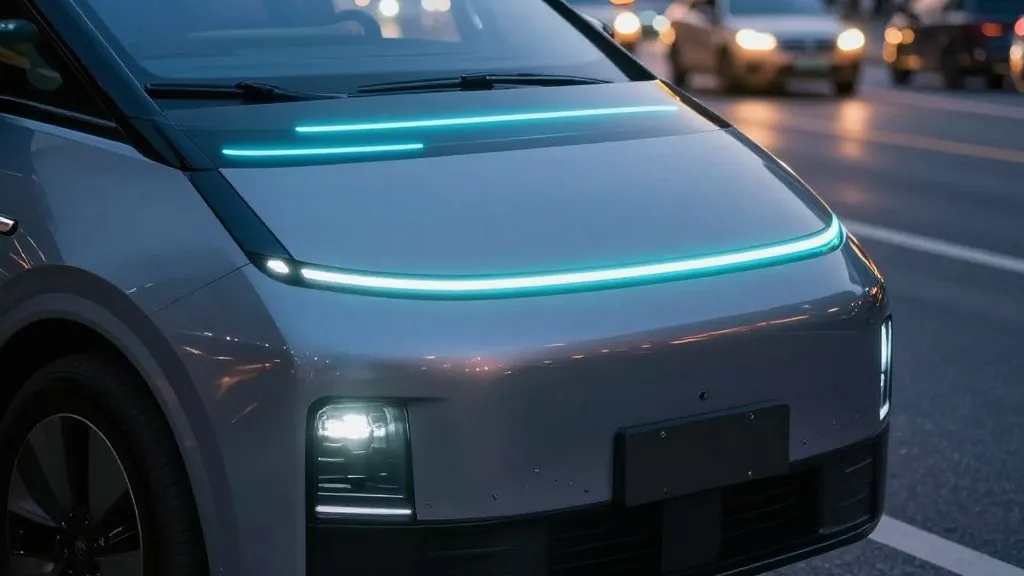
The National Highway Traffic Safety Administration (NHTSA) has released a proposed update to Federal Motor Vehicle Safety Standard No. 108 that would establish a distinct cyan-colored light for autonomous vehicles. This latest regulatory move aims to resolve years of industry debate over how driverless cars should visually signal to the public that no human is operating the vehicle. By defining a specific blue-green hue, the federal government seeks to create a uniform visual language that distinguishes automated driving systems from conventional traffic.
The proposal specifically targets the communication gap between robotaxis and other road users, including law enforcement. NHTSA argues that current automotive lighting standards rely heavily on red, amber, white, and flashing blue or red lights for functions such as braking, turn signals, and emergency services. By introducing cyan, regulators believe they can fill a visual void without causing confusion among drivers who are accustomed to existing color codes. This standardization is intended to ensure that when an automated driving system is active, the signal is clear and consistent across different manufacturers.
There is some historical precedent for this approach, as Mercedes-Benz previously received state-level approval for turquoise lights on its Level 3 Drive Pilot vehicles. Although the automaker has since moved away from that specific hardware in favor of a different system, the concept of using a unique color to denote autonomy has gained traction. NHTSA is looking to establish a national standard that operators such as Waymo, Nuro, and Zoox, along with major automakers like GM and Mercedes, can adopt uniformly. This would replace the current patchwork of proprietary signaling methods with a federally recognized protocol.
Under the new rules, cyan marker lamps would remain optional for manufacturers rather than mandatory. However, the proposal sets strict federal standards regarding the color, brightness, and placement of these lights. This regulatory framework is designed to prevent a fragmented market where different companies use varying colors and intensities. By creating a legal baseline, NHTSA ensures that any automaker choosing to implement these lights does so in a consistent manner that drivers can reliably recognize.
Beyond adding new lighting requirements, the proposal seeks to streamline regulations by removing controls that are irrelevant to vehicles without human drivers. Current standards require physical hazard switches, manual beam shifters, and turn levers inside the cabin. NHTSA proposes eliminating these mandates, allowing manufacturers to design interiors that are optimized for autonomous operation. The agency is also updating the 12.8-volt testing standard to accommodate modern LED architectures, reducing administrative hurdles for companies building with contemporary technology.
This regulatory shift is part of a broader administrative push by the Department of Transportation to facilitate the deployment of autonomous vehicles. The goal is to make it easier for automakers to build cars that lack traditional human-operated controls, such as steering wheels and pedals. By removing requirements that dictate the placement of high-beam lights relative to low-beams, and by simplifying electrical testing standards, the government is attempting to align federal regulations with the realities of modern vehicle engineering.
Despite the push for streamlining, regulators continue to enforce existing rules strictly where standards have not yet been updated. Last month, NHTSA opened an audit query into the Tesla Cybercab to examine the technical data and processes Tesla relied upon during its certification. The investigation focused on the absence of certain design features, including sideview mirrors, pedals, and a steering wheel, which are currently required under FMVSS. This dual approach of proposing new standards while auditing existing compliance highlights the transitional nature of the current regulatory landscape for driverless technology.
Source: The Verge