AI data center expansion displaces wolves into Finnish villages
Unauthorized forest clearings for new servers have pushed wildlife toward residential areas, prompting regulatory stop-work orders and local safety concerns.
By Min-jun Kim ·
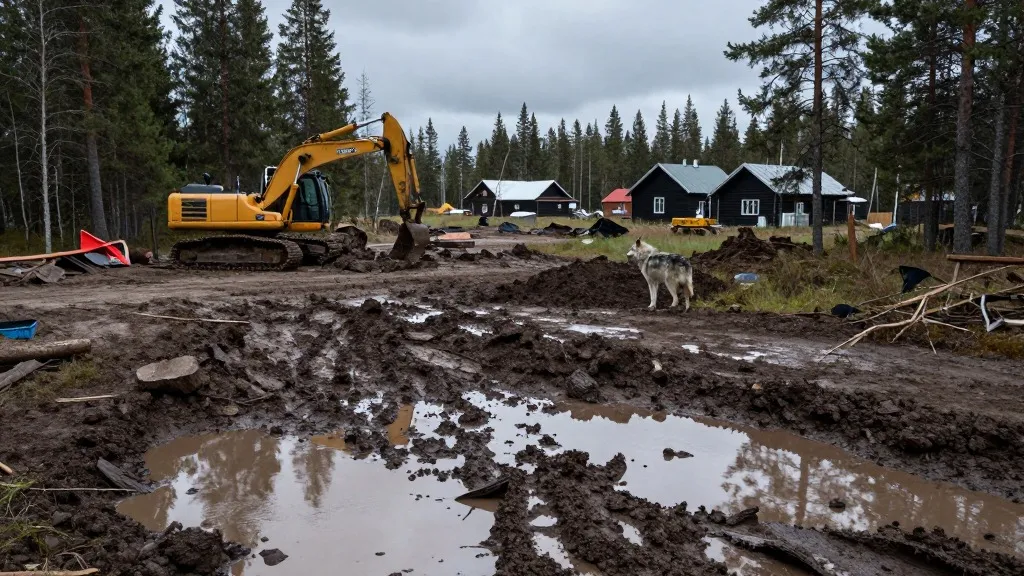
Google’s rapid expansion of artificial intelligence infrastructure in Finland has triggered a significant regulatory and ecological backlash, with the company’s country manager issuing an apology for unauthorized land development. The controversy centers on construction sites near the villages of Muhos and Otanmäki, where large tracts of forest were cleared to make way for new data centers. While the tech giant aims to secure a foothold in the European market, the speed of its buildout has outpaced local environmental protections, leading to a formal halt in operations by Finnish authorities.
The primary financial and operational issue involves two distinct sites where work has been paused. Near Muhos, approximately 816 acres of forest were cleared without full authorization, a process that has transformed the terrain into a vast expanse of mud. Roughly 55 miles southeast of Otanmäki, another 500 acres of woodland were removed. The Finnish Licensing and Supervision Authority (LVV) has issued orders for Google to cease development at both locations, citing violations of environmental policy. This intervention represents a notable friction point in Google’s strategy to establish a major AI presence in the region.
Beyond the immediate regulatory hurdles, the physical changes to the landscape have created unexpected operational risks for nearby communities. Local residents report that wolf packs, which previously relied on the dense forest for territory, are now roaming into villages. Anni Ranta, a resident of Otanmäki with generational ties to the area, noted that the displacement of wild animals has brought them closer to human settlements. This shift raises serious safety questions for the local population and adds a new layer of complexity to the social license required for such large-scale industrial projects.
Community sentiment has moved beyond simple environmental protest to include concerns about noise, water quality, and even geopolitical security. Residents have complained about construction noise, streams turning brown, and the displacement of rare bird species. Ranta also expressed fear that the high-value U.S.-owned infrastructure could make Finland a more attractive target for Russian aggression, a concern that adds a strategic dimension to the local dispute. The Finnish Association for Nature Conservation has described Google’s handling of environmental regulations as unprecedented in its clarity of violation.
Despite the stop-work orders, Google maintains a cooperative posture. A company spokesperson stated that the firm will fully comply with the LVV’s requests and looks forward to an open dialogue with authorities to strengthen its partnership with Finland. The company appears to be banking on the long-term economic benefits of its data centers to outweigh the short-term regulatory friction. However, the current situation highlights the growing cost of rapid AI infrastructure deployment, where environmental compliance and community impact are becoming critical variables in the cost-benefit analysis of global tech expansion.
The pause in construction forces a reassessment of timelines and costs for these facilities. While the exact financial impact of the delay is not yet quantified, the need for remediation and potential reforestation will likely add to the capital expenditure. For investors and stakeholders, this case serves as a reminder that the race to build AI capacity is not just a matter of power and cooling, but also of navigating complex local regulatory and ecological landscapes.
Open questions remain regarding the timeline for resuming work and the extent of required environmental remediation. As Google seeks to balance its ambitious growth targets with local expectations, the outcome of this dispute may set a precedent for other AI data center projects in environmentally sensitive regions.
Source: Tom's Hardware